Best Perplexity Rank Trackers for Online Stores in 2026

· By Xhurian Shaba, co-founder and CEO of ecentic

16 min read

Compare the best Perplexity rank trackers for e-commerce: what each measures, who it fits, and what to do when the report shows your products missing.

00

Introduction

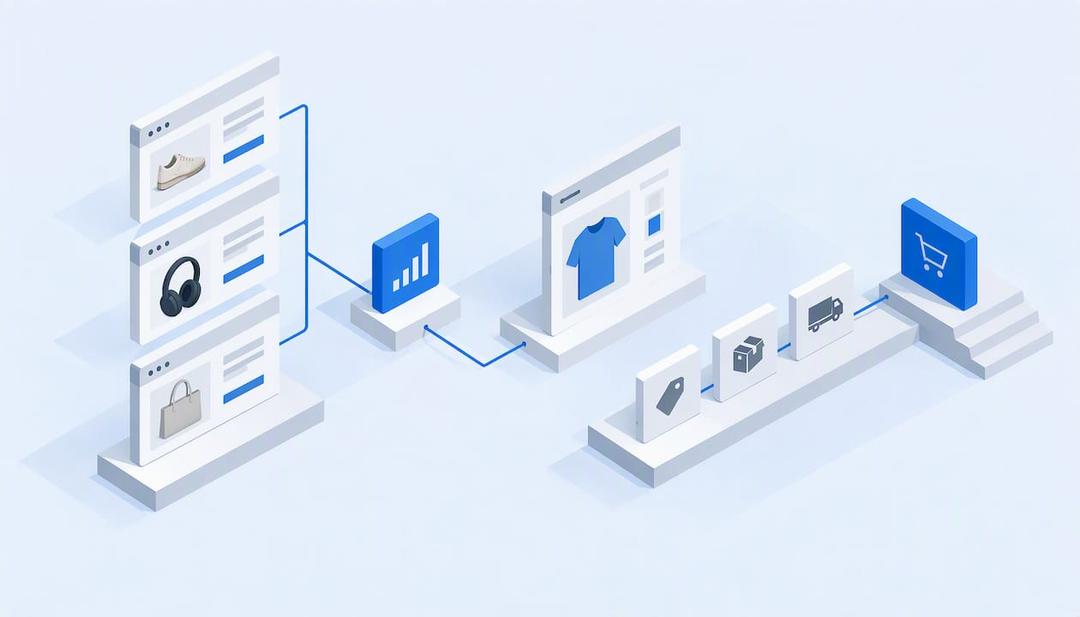
Abstract paths connect citations and product checkout data

Whether people google, go to Amazon or ask a chatbot, AI now gives them a response with a product in it, and most e-commerce brands have no idea how to be that product. If you only want to watch Perplexity, the tools to look at are Peec AI, Otterly.AI, AthenaHQ, Profound and SE Ranking. They are good at measuring. If you want the product to be picked and bought, you need something that changes the store, which is where we come in.

I’ll say the awkward part early. A Perplexity “rank” is not a rank. There is no page one with ten slots, just a written answer with sources attached, and your product is in it or it isn’t. Trackers sell you a chart of that, and the chart is fine. It just won’t fix your product feed.

ecentic
ecentic.ai
Make Your Products Easier to Choose
ecentic checks how AI agents compare your products with a named competitor, then helps improve the product data they read.
Check my store free
01

TL;DR

TL;DR

  • Perplexity trackers measure whether your URL is cited, whether your brand is named in the answer, and in what order. They don’t give you a single rank number.
  • Peec AI, Otterly.AI, AthenaHQ, Profound and SE Ranking all track Perplexity. Pick by team size, prompt volume and whether you want reporting or a to-do list.
  • Some plans gate Perplexity behind a higher tier or a model slot, so check that Perplexity is in the plan you are buying.
  • For a store, a citation report is half the job. The other half is the product title, description, structured data and checkout, and that is what ecentic works on.
  • Start with the free scan on ten products before you pay anyone for anything.
02

What a Perplexity tracker actually measures

What a Perplexity tracker actually measures

Perplexity returns one synthesized answer with inline citations and a sidebar of source links. So trackers don’t report position the way an old keyword tool did. According to a 2026 comparison of 18 tools, they can measure citation presence (does your URL appear), citation order, quote weight and attribution, and some add brand mentions and sentiment.

The difference between a citation and a mention matters more than it sounds. A citation means your page was used as a source. A mention means your brand name showed up in the sentence. You can have one without the other. A review site can cite itself while recommending your competitor’s blender, and a chatbot can name your brand from memory without linking to you.

For a store, I’d add a third thing the trackers rarely cover: whether the product the answer names can be found, compared and bought. That depends on product data, not on blog posts.

03

How to check by hand first

How to check by hand first

Before you buy a tracker, spend an hour on this. It costs nothing and teaches you what the paid reports will show.

  1. List ten questions a buyer would ask about what you sell, in their words. Not your product names. Things like “best running shoes for flat feet under $120”.
  2. Ask each one in Perplexity, with a logged-out window if you can, so your history doesn’t color the answer.
  3. Write down whether your brand is named, whether your URL is cited, and which competitor and which sources show up instead.
  4. Run the same ten again a week later. Answers move, and you want to know how much.
  5. Open the pages that get cited. Look at how their titles, specs and prices are written, then open yours.

You will find that step five is the useful one. We wrote more on what makes pages get cited in our Perplexity citation playbook.

04

The Perplexity trackers worth knowing

The Perplexity trackers worth knowing

I’m going to be fair here. These tools are good at what they were built for, and none of them was built to rewrite your Shopify catalog. I’m not linking them, so look up each vendor’s own pricing page for current plans, because those change often.

Peec AI

Peec AI looks at visibility, position, sentiment, share of voice, prompts, competitors and cited sources together, and it offers gap analysis and product-level tracking. It fits marketing teams that want a dashboard they can show a boss. Watch the plan details: Perplexity access depends on the tier and on which models you select.

Otterly.AI

Otterly.AI covers ChatGPT, Google AI Overviews, Google AI Mode, Gemini, Copilot, Claude and Perplexity, with prompt research, citation monitoring and content audits. It is the one I’d point a small team at first, because the entry price is low and the setup is quick. It fits a store owner who wants to see the shape of the problem before committing budget.

AthenaHQ

AthenaHQ tracks brand mentions across a long list of models, plus competitors and citation sources. It adds weighted citation-order scoring and content recommendations. It fits mid-size brands with a content team that can act on recommendations.

Profound

Profound is built for larger companies and tracks Perplexity on its higher plans. It fits enterprise marketing departments that need reporting across many brands and regions. If you are a ten-person store, it’s probably more tool than you need.

SE Ranking

SE Ranking is an established SEO suite that has added AI tracking, including sentiment trends. It fits teams already living in it for classic search, who would rather add a tab than learn another product.

Rankability and Scalenut

Rankability flags citation drops and new citation opportunities, which helps you see which sources are shifting. Scalenut bundles AI tracking with content creation and keyword planning. Both fit content-led teams more than catalog-led ones.

05

Side-by-side: who each one fits

Side-by-side: who each one fits

Tool Best known for Fits Watch for
Peec AI Visibility, sentiment, share of voice, source gaps Marketing teams that report upward Perplexity depends on tier and model slots
Otterly.AI Broad engine coverage, low entry price Small teams starting out Prompt limits on entry plans
AthenaHQ Citation-order scoring, recommendations Mid-market brands with writers Content-first, not catalog-first
Profound Enterprise reporting Large multi-brand companies Overkill for small stores
SE Ranking Sentiment trends inside an SEO suite Teams already using it AI tracking is one module among many
ecentic Fixing product data and agent checkout Shopify and WooCommerce brands Does not track Perplexity (see below)

The last row is the one I owe you a straight answer on.

06

Fair caveat: ecentic does not track Perplexity

Fair caveat: ecentic does not track Perplexity

Fair caveat: ecentic does not scan Perplexity, so it is not a Perplexity rank tracker, and I’d rather you hear that from me than discover it after signing up. ecentic helps online stores sell when AI agents do the shopping: it optimizes their product feed and catalog so AI shopping agents pick their products and can actually buy them.

We connect to Shopify, WooCommerce or a product feed. We have ChatGPT, Claude and Gemini compare each product with a named competitor’s, and we show why yours loses. When you click Apply, we rewrite the title, description and structured data and publish them to the store.

So why would a Perplexity-curious store owner care? Because the reasons a product loses in one assistant mostly sit in the same place: thin titles, missing attributes, broken structured data, a checkout that stalls. A tracker tells you that you lost. The data tells you why.

07

Why the report alone won’t sell anything

Why the report alone won’t sell anything

Here is what we have seen in our own simulations. By October 2026 we had run 36,797 simulated purchases. On the same catalog, ChatGPT picked the product about 3x as often as Claude or Gemini, 51.6% against about 18.5%. Same products, different pickers. That is a good reason to distrust any single number from any single assistant, ours included.

Two anonymous audits show where the real losses hide. A spirits marketplace doing about €70M a year had a fault in the data agents read on 88% of its 9,699 products. When agents were asked where to buy two bottles it stocks, it came up 0 times in 20. A tracker would have shown that zero faithfully. It would not have shown the 88%.

The second is a Swedish skincare brand. Agent checkouts reached payment in 0 of 6 countries, because one shipping setting asked for a phone number. An agent can’t phone anyone. No citation report would have caught it, because the product was recommended just fine. It simply couldn’t be bought. Very efficient way to lose a customer.

08

Perplexity, checkout and the rest of the AI shelf

Perplexity, checkout and the rest of the AI shelf

Every assistant is moving toward buying, but not at the same speed or in the same way. Buying inside the AI answer is live on Google AI Mode and Gemini in the US through UCP, Google’s open standard for agent checkout. ChatGPT, for now, links out to the store’s own checkout. OpenAI has ACP, Google has UCP, Amazon has a wall.

That is why I treat Perplexity tracking as one input. Perplexity matters, and the citations do show you which sources shape its answers. But the work that carries over to every assistant is clean product data and a checkout an agent can finish. We cover the shopping side in our guide to Perplexity shopping, and the data side in five steps for product pages.

09

How to choose

How to choose

A few honest rules of thumb.

If you have no budget and no idea where you stand, do the hand check above, then use a low-priced tracker for a month. Otterly.AI fits that.

If you have a marketing team that needs reporting on share of voice and sentiment, Peec AI or AthenaHQ fit better, and Profound fits if you are large enough to need it.

If you already pay for SE Ranking, switch on its AI module before buying anything new.

If you run a Shopify or WooCommerce store and the question is “why doesn’t the assistant pick my product and why can’t it buy it”, that is a store problem, and a tracker will tell you about it without solving it. I think many stores will end up with both: a tracker for the dashboard, and something that edits the catalog.

Whichever you choose, ask the same three questions of the vendor: is Perplexity included in my plan, how many prompts do I get, and what do I do on Monday with the report? The last one is the real test. We compare more tools in our roundup for e-commerce stores and for Shopify.

10

Our take

Our take

I think the industry started with the wrong question. “Where do I rank in Perplexity” assumes a list, and agents don’t read lists. They read your product feed, your catalog and the structured data on your product pages. They never see your homepage.

We built ecentic around that. It works on the store itself: the product feed, the catalog and the checkout an agent uses to buy. We have ChatGPT, Claude and Gemini compare each product with a named competitor’s, show why the agent picks the other one, and publish the fixed title, description and structured data when you click Apply.

On Shopify, the fixes also go into Google Merchant Center, and we track visits from AI assistants. On WooCommerce, the free ecentic plugin lets agents search, fill a cart and check out through UCP. That checkout part is what plain feed tools don’t do.

We are pre-revenue and running pilots, and I’d rather say so. Our first pilot, DUA Flavours, saw visits from AI assistants and direct traffic rise 12% from April to July 2026. That is a visits number, not a sales number, and I won’t pretend otherwise.

I disagree with anyone who says tracking is the product. Tracking is the thermometer. You still have to treat the fever.

Xhurian Shaba

11

Where ecentic fits in your stack

Where ecentic fits in your stack

Get the sale when AI does the shopping. That is the whole pitch, and the starting point is free: the scan covers your top 10 products and needs no card. It shows how ChatGPT, Claude and Gemini compare your products with a named competitor’s, and why you lose.

ecentic

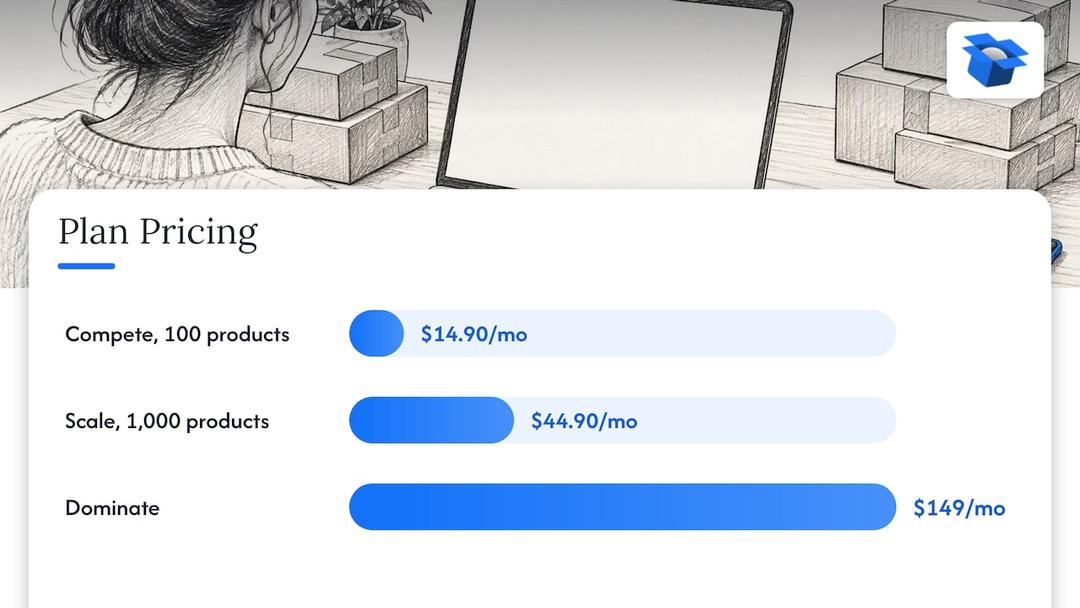
Paid plans are on the pricing page. Compete is $14.90 per month for up to 100 products. Scale is $44.90 per month for up to 1,000 products, with one-click fixes. Dominate is $149 per month and adds Google Merchant Center sync and agent checkout setup. There is also a pay-as-you-go option at 3% of AI-attributed orders, capped at $500 per month, and Enterprise has custom limits, API and MCP access and a DPA. If you run Shopify, see how it works on Shopify. On WooCommerce, the plugin page covers agent checkout. You can also test whether your store is ready for agent checkout with the free UCP validator.

If you are comparing us with Peec AI, our Peec AI alternatives guide sets out where each fits.

Where ecentic fits in your stack

12

What to do with the results

What to do with the results

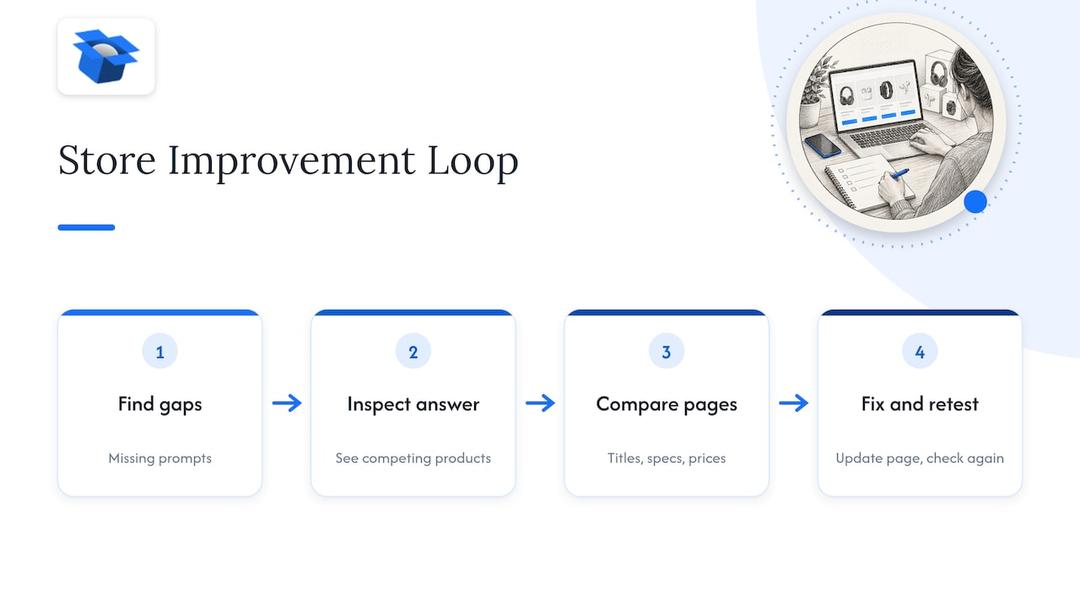
Whatever tool you pick, the loop is the same. Find the questions where you are missing. Open the answer and see who is there instead. Compare their product pages with yours: title wording, attributes, specs, price clarity, reviews, structured data. Fix the gap on the product page, then check again.

Four-step loop from missing prompts to retesting product pages

The citation sources matter too. If Perplexity keeps citing the same review sites and forums for your category, that tells you where the trust sits, and our piece on brand authority for AI covers how those signals get built. For a broader view of measurement, there is our guide to AI search for marketing teams.

One more habit that pays: test the purchase itself. Ask an assistant to buy your own product, in your own market, and watch where it stops. Shipping fields, phone numbers, missing size variants and unclear stock status all kill agent orders quietly. You can try this against any store in the UCP playground.

13

FAQ

FAQ

What is the best Perplexity rank tracker?

There is no single best one. Otterly.AI suits small teams on a tight budget, Peec AI and AthenaHQ suit marketing teams that need reporting, and Profound suits large companies. Check that Perplexity is actually included in the plan you pick, because some plans gate it.

Can I track Perplexity rankings for free?

You can do it by hand. Ask your buyers’ questions in Perplexity, note whether your brand is named and your URL is cited, and repeat weekly. It is slow and the answers shift, but it shows you the problem before you spend anything.

What is the difference between a citation and a mention?

A citation means Perplexity used your URL as a source. A mention means your brand name appears in the answer text. Good trackers record both, and a store can have one without the other.

Does ecentic track Perplexity?

No. ecentic does not scan Perplexity. It has ChatGPT, Claude and Gemini compare your products with a named competitor’s, shows why you lose, and publishes the fixes to your store when you click Apply.

How is a Perplexity tracker different from fixing my product data?

A tracker tells you whether you appear. Fixing product data changes why you do or don’t. Most stores need to know both, and the second one is where orders come from.

Guides and research on winning AI shopping agents.