Turning findings into fixes you can measure
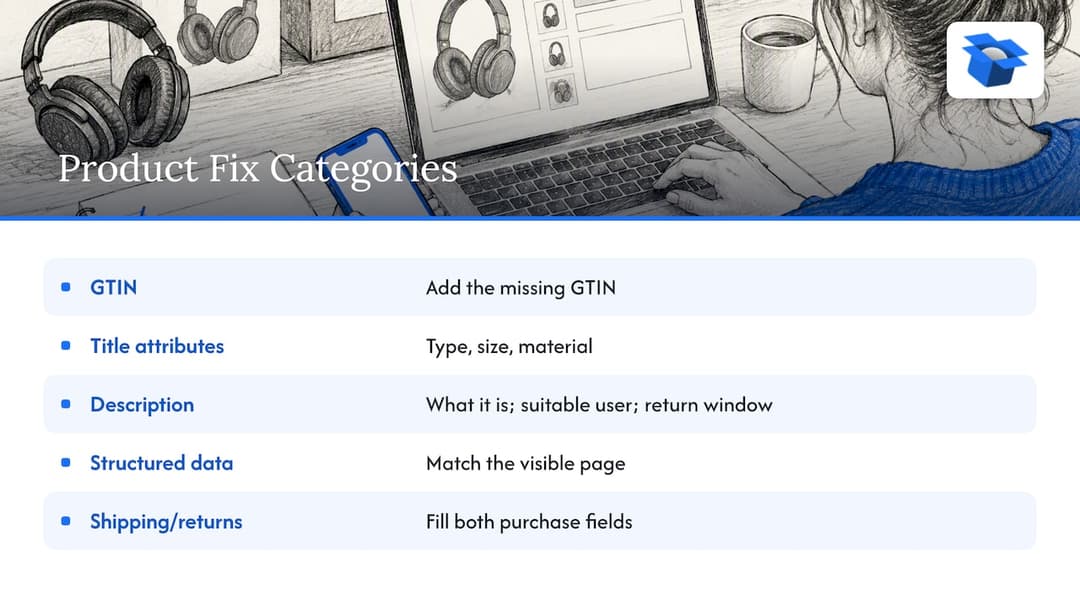
Most fixes are dull and specific. Add the missing GTIN. Put product type, size and material in the title. Replace a mood-board description with one that states what the thing is, who it suits and what the return window is. Make the structured data match the visible page. Fill the shipping and returns fields so a purchase can finish.
Then measure in two layers.
First, re-run the same comparison. If the agent now picks you and cites the attribute you added, the fix landed. This is cheap and fast, and it is where simulation earns its keep.
Second, watch real behavior. Visits from AI assistants are the earliest signal you can see in analytics. Our first pilot, DUA Flavours, saw visits from AI assistants and direct traffic rise 12% from April to July 2026. That is a visits number, not sales, and one pilot is one pilot. But it is the kind of movement you can actually watch for, and our AI agent traffic playbook shows how to set the tracking up. For the listing work itself, see our guide to product listing optimization for AI picks.
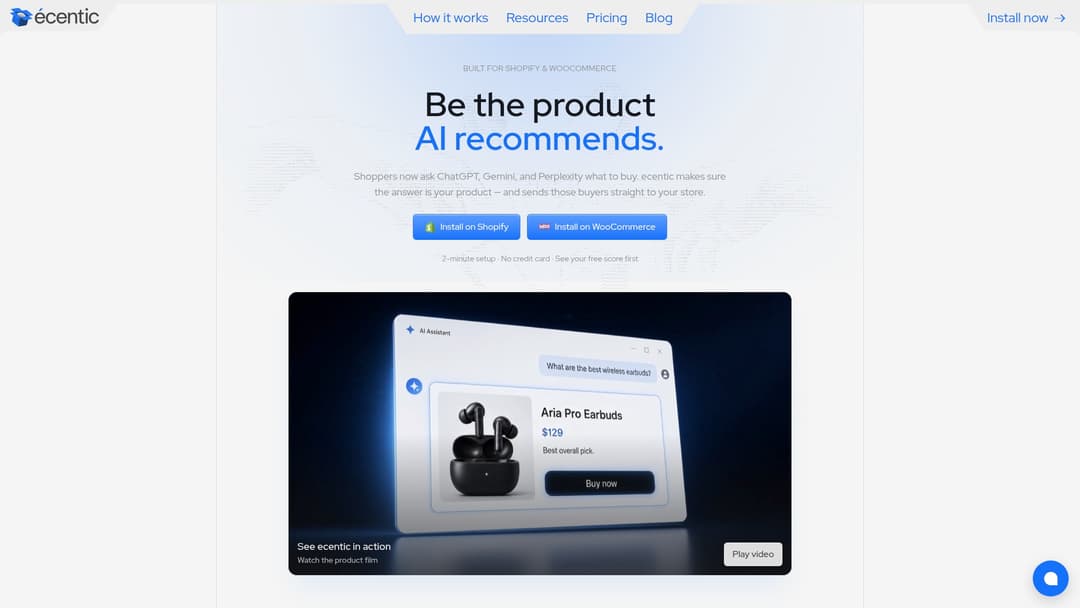
On Shopify, ecentic pushes fixes into Google Merchant Center and tracks visits from AI assistants. On WooCommerce, the free ecentic plugin lets agents search, fill a cart and check out through UCP. The checkout part is what plain feed tools skip, and it is where our Swedish example lost every sale.
A note on competitors, since you will compare tools. Plenty of feed management products are good at what they do: cleaning, mapping and syndicating a catalog to many channels. If your main problem is getting one feed into twenty marketplaces, they fit you well. They generally stop at the feed. Our comparison, best AI shopping agent optimization tools, sets out who fits whom.