
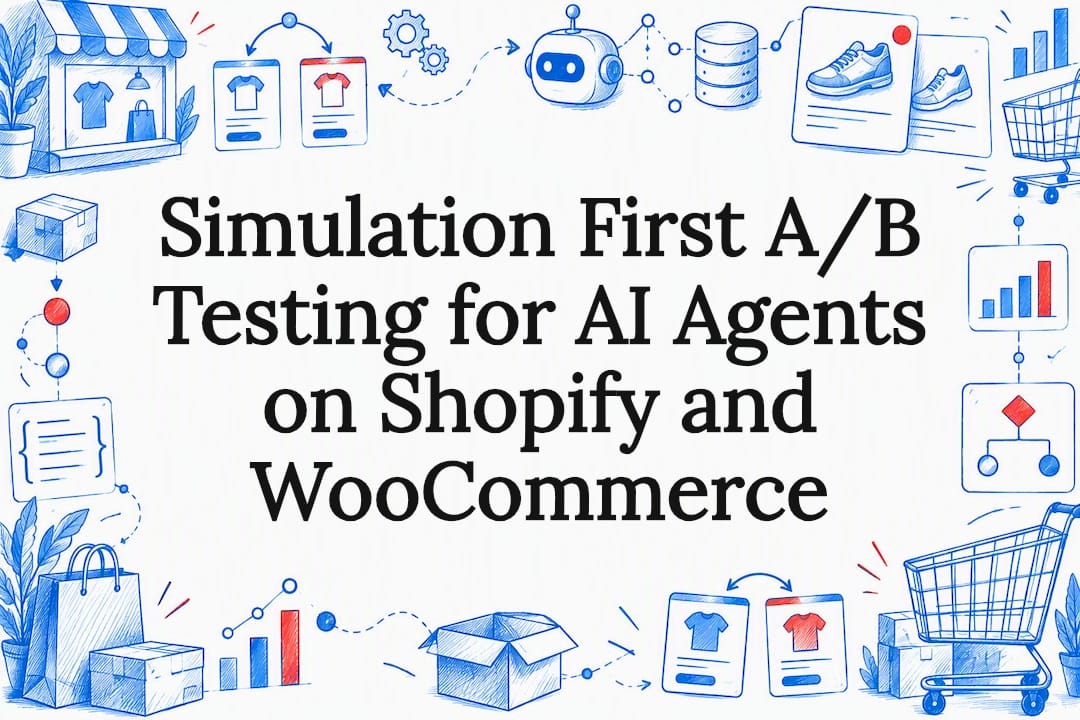
A/B testing for AI means running controlled comparisons of your product listing variants to see which version ChatGPT, Gemini, Claude, or Perplexity actually recommends to a shopper. Start by simulating a handful of your top SKUs against these agents, then fix the two things that break most tests before you even begin: missing structured data and stale feed fields. Prioritize schema completeness, feed freshness, and review depth first, since those three signals carry the most weight in what an agent surfaces.
TL;DR:
- Structured data fields such as priceValidUntil, deliveryTime, and merchantReturnDays are often missing or outdated, significantly impacting agent recommendations.
- Feed freshness and real-time updates are crucial, as outdated prices or availability can lead to mismatched listings and lost sales.
- Testing should focus on isolating specific schema or feed variables rather than random copy edits, since agent signals are primarily data-driven.
- Variants must be tested across multiple models because different AI agents have distinct preferences for placement and attributes.
- Running simulation-based audits before live deployment can quickly identify schema gaps, improve AI visibility, and increase traffic from high-intent shoppers.
 Install on Shopify
 Install on WooCommerce