
ecenticecentic
How it worksResourcesPricingBlog
Install now
ASCII-art illustration of a stack of books

Win AI Shopping Picks: Product Listing Optimization for Ecommerce Ops

Published: September 18, 2026 · 11 min read

Operational guide for ecommerce teams to win AI recommendations: fix live feeds, add detailed titles and schema, verify with simulation.

00

Introduction

Decorative AI shopping optimization title card

The best product listing optimization for AI shopping agents comes down to two things: feeds that are accurate and refreshed constantly, and product pages written to answer specific questions rather than sell a lifestyle. Get those right and ChatGPT, Gemini, and similar agents can actually read, match, and recommend what you sell. Priority order: feed hygiene, attribute-rich titles and specs, structured schema, correct price and stock data, and visible reviews.


TL;DR:

  • Accurate, constantly refreshed product feeds with complete data fields are essential for AI agents to consider and recommend your products effectively.
  • Structuring product titles with specific attributes and including detailed schema markup improves matching and visibility in conversational queries.
  • Regular automated feed and page reconciliation helps prevent mismatches in stock and price information that erode agent trust over time.
  • Simulating AI agent decision-making identifies listing gaps faster than manual reviews, enabling quicker, targeted improvements.
  • Tools like Ecentic automate feedback-based rewrites and track real-world impact, streamlining ongoing catalog optimization for AI-driven discovery.
Ecentic
Make Your Products AI-Ready
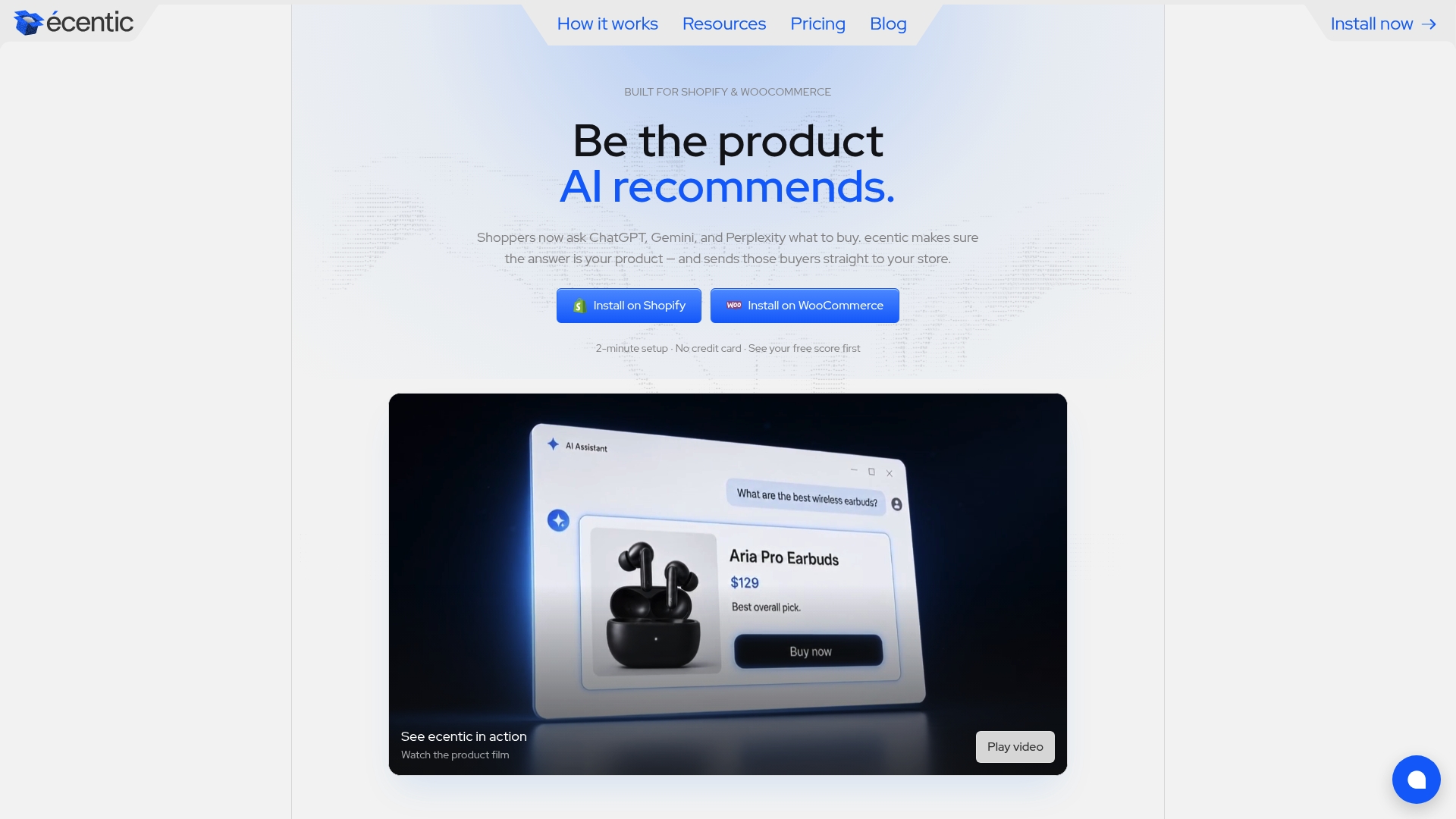
Ecentic shows how AI agents evaluate your product pages, highlighting listing gaps and actionable ways to improve recommendation visibility.
Explore Ecentic
01

What Do AI Shopping Agents Look For Before Recommending a Product?

What Do AI Shopping Agents Look For Before Recommending a Product?

An agent’s first job is deciding whether a query even deserves a product answer. That’s called shopping-intent classification, and it happens before anything about your listing gets evaluated. If a shopper asks something vague, the agent might return a paragraph of prose instead of a product carousel. Once a query does trigger shopping intent, the agent pulls from live catalog data, not a cached memory of your brand.

What it pulls matters more than most merchants assume. Price, availability, product identifiers, images, and specifications carry the most weight because they’re verifiable and structured. Marketing copy that can’t be checked against a feed tends to get ignored or paraphrased into something generic.

Attribute density is the other lever. A listing that specifies material, dimensions, compatibility, and intended use gives the agent more surface area to match against a specific query. A shopper asking for “a waterproof jacket for cycling in cold weather” needs a page that actually contains those words as structured facts, not just implied through a product photo.

  • Price and availability: agents treat these as live facts, not static content.
  • Identifiers: GTIN, MPN, and SKU let agents deduplicate and verify your listing against other data sources.
  • Attribute completeness: materials, dimensions, and use cases improve query matching.
  • Merit signals: ratings, review counts, and seller reputation function as tiebreakers between similar products.

Here’s the shift most merchants haven’t internalized yet: descriptive, attribute-rich titles consistently outperform short, generic ones for conversational matching. “Men’s Running Shoes” gives an agent almost nothing to work with. “Waterproof Lightweight Men’s Trail Running Shoes with Arch Support” gives it five separate hooks to match against a real question. That’s not keyword stuffing. It’s giving the agent the vocabulary a shopper would actually use.

02

Getting Your Feeds and Protocols Right

Getting Your Feeds and Protocols Right

Your merchant feed is the backbone of agentic visibility, more than your website’s design or your ad spend. Agents don’t crawl your storefront the way a search engine used to. They read structured feeds, so an outdated or malformed feed quietly disqualifies you before a shopper ever sees your product.

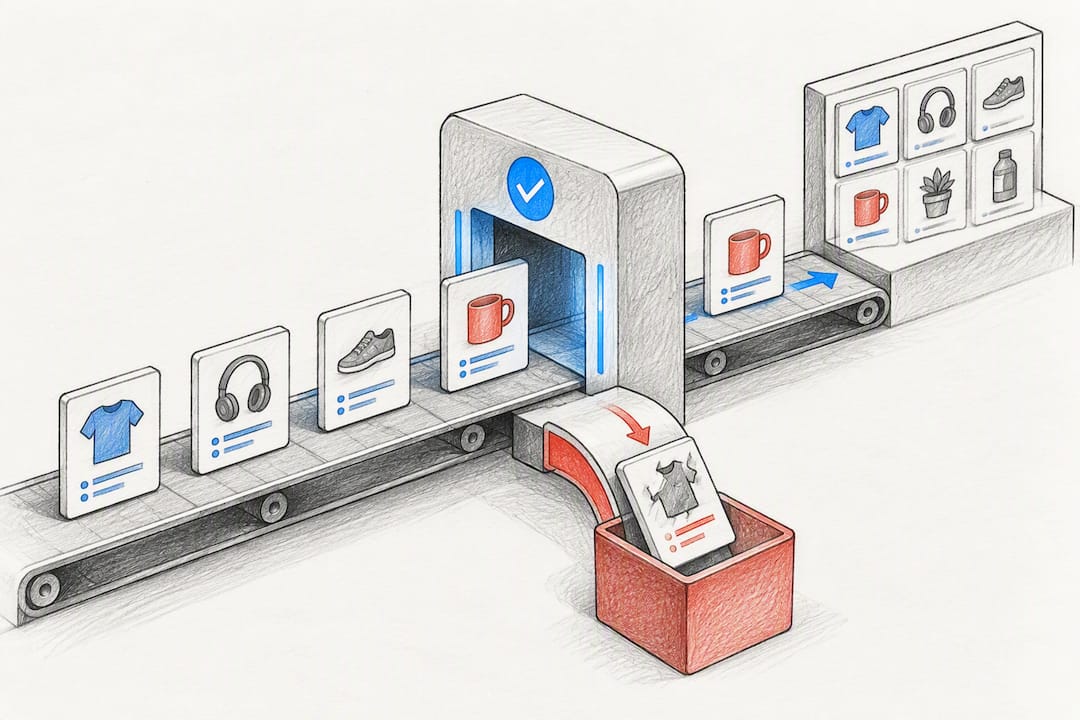
Structured product feed passing validation

Start with format. CSV, TSV, JSON, and XML are all acceptable, but completeness matters more than the file type. Every SKU needs price, availability, identifiers, images, and category at minimum. Missing fields don’t just weaken a listing, they can drop it from consideration entirely.

Cadence is where most merchants underinvest. OpenAI’s Agentic Commerce Protocol encourages merchants to share live product feeds and promotions directly, and the spec supports refresh intervals as tight as every 15 minutes. A feed that updates nightly is fine for a search engine index. It’s a liability for an agent trying to quote today’s price.

  1. Validate your feed against the required schema before submission, not after something breaks.
  2. Set refresh cadence as close to real time as your platform allows, ideally under 15 minutes for price and stock.
  3. Confirm your site allows AI crawlers and that key pages render server side, not through client-side JavaScript that a crawler can’t execute.
  4. Assign a single owner for feed freshness so a mismatch has one accountable person, not three teams pointing at each other.

Pro Tip: Check your robots.txt and firewall rules specifically for AI crawler user agents. A security team locking down “bot traffic” during a WAF update has silently blocked agent access more than once.

03

Designing Answer-Shaped Product Pages

Designing Answer-Shaped Product Pages

An answer-shaped page puts the facts an agent needs in the first paragraph, not buried under three scrolls of brand storytelling. Title structure should follow a simple pattern: brand, key attribute, specific use case, and a differentiator. “Patagonia Nano Puff Insulated Jacket for Cold-Weather Commuting, Packable” tells an agent (and a human) everything it needs in one line.

Specs belong in real HTML tables, not screenshots or infographics. Most AI crawlers can’t read text embedded in images, so a beautifully designed spec graphic is functionally invisible to the systems deciding whether to recommend you. Server-side rendering and semantic HTML keep that data crawlable.

Schema markup is where a lot of merchants stop halfway. Basic Product schema covers name, price, and image, but agents increasingly reward depth: GTIN, MPN, material, color, size, shippingDetails, and hasMerchantReturnPolicy. If you sell variants, ProductGroup schema ties them together instead of forcing an agent to guess whether five listings are the same shirt in five colors.

Schema element What it enables
GTIN/MPN Cross-catalog matching and deduplication
shippingDetails Accurate delivery estimates in agent responses
hasMerchantReturnPolicy Return terms surfaced without a page visit
aggregateRating Star ratings shown directly in product cards
ProductGroup Variant grouping across color/size options

Deeper schema properties, including MemberProgram and UnitPriceSpecification, let you declare member pricing and unit pricing in a machine-readable way, which matters more every quarter as agents get better at comparing offers across retailers.

04

Building an Operational Checklist for Feed and Page Reconciliation

Building an Operational Checklist for Feed and Page Reconciliation

A feed that says “in stock” while the page says “sold out” is the single fastest way to lose agent trust. Reconciliation isn’t a one-time audit, it’s a recurring automated comparison between what your feed claims and what your page actually renders.

  1. Run automated diffs between feed fields and rendered page fields daily, and treat any mismatch as a bug ticket, not a footnote.
  2. Track agent-attributed traffic separately using UTM parameters or referral detection, so it doesn’t get folded into generic organic numbers.
  3. Test one variable at a time, title phrasing or a single spec addition, and give each test a defined measurement window before drawing conclusions.
  4. Set alerts for feed staleness and price drift, with a named owner and a documented rollback plan.

Frequent feed updates reduce price and stock mismatches measurably, which is exactly the kind of correctness gap that erodes an agent’s confidence in your catalog over time. Rescanning continuously, rather than auditing quarterly, is what catches drift before it costs you a recommendation.

05

Why Simulation Beats Guesswork

Why Simulation Beats Guesswork

Most merchants find their biggest wins in unglamorous places: a missing material attribute, a feed that hadn’t refreshed in nine days, a title that read like a SKU code. Simulating how an agent actually evaluates a listing surfaces those gaps faster than manual review ever does, because you see the win or loss reasoning directly instead of inferring it from traffic drops weeks later. That diagnostic speed is what separates teams that iterate weekly from teams still debating whether the problem is real.

— Xhurian

06

How Ecentic Turns Diagnosis Into Published Fixes

How Ecentic Turns Diagnosis Into Published Fixes

Ecentic is built for the exact gap this guide describes: knowing your feed is technically valid isn’t the same as knowing whether ChatGPT or Gemini would actually pick your product over a competitor’s. Ecentic simulates that decision directly, running your catalog against real agent behavior and returning plain-English win and loss reasoning instead of a generic SEO score.

Ecentic

From there, the platform suggests specific listing rewrites, tightening a title, adding a missing attribute, restructuring a spec block, and pushes them live with one-click publishing to Shopify or WooCommerce. Continuous rescans track whether those changes actually move your agent selection rate, and attribution reporting shows which visits and sales came from agent-driven traffic rather than guesswork. If you’re rebuilding titles and schema by hand across a catalog with hundreds of SKUs, that manual pace is the real cost, not the tooling.

Start with a free scan to see where your current listings stand, then compare Compete, Scale, and Dominate plans to find the tier that matches your catalog size and how fast you want to move.

07

Where to Verify These Technical Details

Where to Verify These Technical Details

  • Powering product discovery in ChatGPT: the primary source on ACP and feed submission.
  • Shopping with ChatGPT: how product cards get assembled from live data.
  • Ecommerce AI SEO guide: schema and rendering specifics for LLM crawlability.
  • Why optimize for ChatGPT: complementary tactics for brand visibility in agent responses.
08

Sources

Sources

  • Ecommerce AI SEO: How to optimize online stores for LLMs
  • Powering product discovery in ChatGPT
  • Shopping with ChatGPT
  • AI commerce: discovery outlives checkout
09

FAQ

FAQ

What Is Product Listing Optimization for AI Shopping Agents?

It means structuring your feed and product pages so agents like ChatGPT and Gemini can accurately read, match, and recommend your products. That includes accurate merchant feeds, attribute-rich titles, and machine-readable schema, not traditional marketplace SEO tactics.

How Often Should I Update My Product Feed?

As close to real time as your platform supports. OpenAI’s Agentic Commerce Protocol supports refresh intervals as tight as every 15 minutes, and stale price or stock data is one of the fastest ways to lose an agent’s trust in your catalog.

Why Do My Product Pages Need Schema Markup?

Schema exposes facts like price, availability, GTIN, and return policy in a format agents can parse without guessing. Deeper fields such as hasMerchantReturnPolicy and shippingDetails let an agent answer shopper questions without needing to visit the page itself.

Can I Just Improve My Titles Without Fixing My Feed?

No. Titles help an agent understand a page it’s already considering, but a broken or stale feed can keep your product out of consideration entirely. Fix feed accuracy first, then invest in attribute-rich titles and descriptions.

How Does Ecentic Help With This Process?

Ecentic simulates how ChatGPT and Gemini evaluate your listings, flags specific gaps, and suggests rewrites you can publish directly to Shopify or WooCommerce. Plans start at $14.90 per month on the Compete tier, with a free scan available to see where your catalog currently stands.

product description improvement tipsproduct listing optimization checklisteffective product listing techniquesmaximize sales with product optimizationtop listing optimization strategiesbest product listing optimizationSEO for product listingsbest images for product listingsbest practices for product listingsproduct title optimization tipshow to optimize product listingsincrease visibility for listings
Back to blogGet started

Guides and research on winning AI shopping agents.

Get picked by AI

Ready to be the product agents recommend?

Install free on Shopify or WooCommerce and see your AI score in minutes.

Install on ShopifyInstall on WooCommerce
ecentic

Win every AI shopping agent's cart.

Built for the agent economy
Product
  • Features
  • How it works
  • Pricing
  • Product Listings
Platforms
  • Shopify
  • WooCommerce
  • Enterprise
Resources
  • Developer docs
  • API reference
  • Resources
  • Blog
  • Compare
  • UCP Validator
  • UCP Playground
  • Book a demo
Company
  • Support
  • Privacy policy
  • Terms of service

© 2026 ecentic. All rights reserved.

Made for merchants who refuse to be invisible to AI.