
ecenticecentic
How it worksResourcesPricingBlog
Install now
ASCII-art illustration of a stack of books

Get AI Shopping Citations in 60–90 Days for Ecommerce AI SEO

Published: September 11, 2026 · 17 min read

Engineer friendly ecommerce AI SEO playbook. Make product facts machine readable, fix schema, feeds, and crawl access in 60–90 days with simulation audits.

00

Introduction

Decorative ecommerce AI SEO title card

Best ecommerce AI SEO comes down to one thing: making your product facts machine-readable and machine-accessible before you worry about anything else. Complete product schema and confirmed access for AI crawlers beat every other tactic on this list combined. The rest of this guide walks through the specific checks, feed fixes, and content changes that turn a store from invisible to citable, with a 60 to 90 day plan you can hand to your team on Monday.


TL;DR:

  • Ensuring complete product schema and unrestricted access for AI crawlers is critical, as feed and site parity significantly impact AI visibility.
  • Structured data types like Product, Offer, Review, and MerchantReturnPolicy directly influence how AI systems extract and cite your product information.
  • Most stores block critical AI crawlers through outdated robots.txt or CDN rules, making audits of access and server-rendered HTML essential first steps.
  • Optimizing for different AI discovery paths involves server-side rendering, accurate feeds, and protocols like UCP or ACP, with ignoring the third path risking future invisibility.
  • Focusing on factual, schema-rich content over volume is key, and tools like Ecentic help simulate AI evaluation, enabling precise fixes that improve visibility and sales.
Ecentic
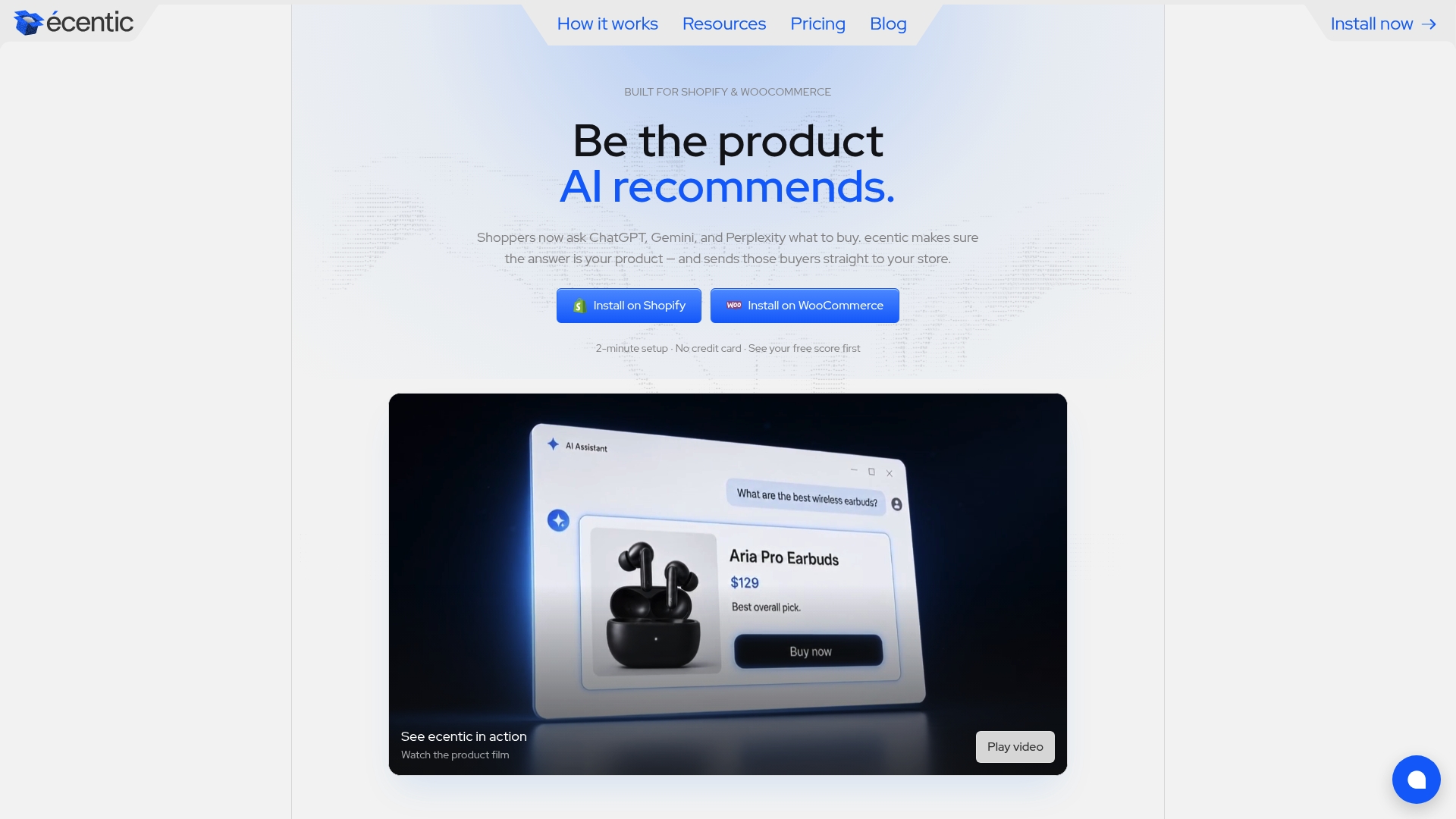
See What AI Agents See
Ecentic simulates AI evaluation of your product pages, showing strengths, weaknesses, and actionable ways to improve AI visibility.
Explore Ecentic
01

What Does Ecommerce AI SEO Look Like in 2026?

What Does Ecommerce AI SEO Look Like in 2026?

Traditional SEO rewards pages that rank. Ecommerce AI SEO rewards pages that get cited, pulled, and recommended inside an AI answer, a shopping agent’s comparison, or a chat response that never sends the shopper to your site at all. That shift changes what you optimize for. Google still cares about backlinks and click-through rate. ChatGPT, Gemini, Perplexity, and Claude care about whether they can extract a clean, verifiable fact from your page in under a second.

A measurable share of generative AI use cases already centers on search and product discovery, which tells you this isn’t a side channel anymore. It’s becoming a primary discovery path for shoppers who used to type a query into Google and scroll.

The query types matter too. A shopper asking “best running shoes under $100” triggers a comparative, budget-constrained search that AI systems answer by pulling structured price and spec data from multiple retailers at once. A shopper asking “waterproof hiking boots for wide feet” triggers a use-case query that rewards detailed, honest product copy over generic marketing language. Your content strategy needs to serve both.

Three layers determine whether your store shows up at all:

  • Infrastructure: can AI crawlers actually reach and render your pages
  • Content worth citing: category intros, buying guides, and comparison-ready specs
  • Off-site authority: reviews, editorial mentions, and forum discussions that reinforce what your own pages claim

Triple Whale’s research frames these three layers as the backbone of AI visibility, and the order matters. If you skip infrastructure, the best content in the world never gets read. Get infrastructure right and skip the content layer, and you’re invisible for the comparative queries that drive the most purchase intent.

02

How Do AI Platforms Discover Ecommerce Products?

How Do AI Platforms Discover Ecommerce Products?

AI systems find your products through three separate paths, and most stores only optimize for one of them.

The first path is direct crawling. Bots like GPTBot, ClaudeBot, and PerplexityBot visit your site the way Googlebot always has, reading HTML and pulling structured data out of your schema markup. If your product pages render that data client-side with JavaScript the crawler doesn’t execute, the bot sees a blank shell.

The second path is merchant feeds. Google Merchant Center, and increasingly direct feed integrations that platforms like ChatGPT are building for shopping, pull structured product data straight from a feed file rather than crawling your site at all. This is often more reliable than crawling because the data arrives pre-structured, but it also means your feed and your live site need to say the exact same thing about price, availability, and stock.

The third path, and the newest one, is agentic commerce protocols. Emerging standards like the Universal Commerce Protocol (UCP) and Agentic Commerce Protocol (ACP) let AI shopping agents query your store’s inventory and even complete checkout on a shopper’s behalf, without a human ever loading your homepage.

Each path favors a different fix:

  • Crawling rewards server-rendered HTML and complete schema on every product URL
  • Feeds reward attribute completeness and feed-to-site parity, checked weekly, not quarterly
  • Agentic protocols reward a validated UCP profile and clean API-level access to real-time inventory

Ignore the third path at your own risk. It’s small today. It won’t stay that way.

03

Is Your Site Blocking the AI Crawlers That Matter?

Is Your Site Blocking the AI Crawlers That Matter?

Most stores that lose out on AI visibility never had a content problem. They had an access problem nobody checked.

Start with robots.txt. Pull it up right now and look for disallow rules that predate 2023, back when nobody had heard of GPTBot. Many ecommerce platforms shipped default configurations that block unknown user agents by default, which now means blocking the exact bots you want visiting. Guides on AI crawler behavior consistently find sites unintentionally blocking GPTBot, ClaudeBot, and PerplexityBot through CDN rules, not deliberate robots.txt disallows, which makes the problem harder to spot without a dedicated audit.

Run this checklist in order:

  1. Read your robots.txt line by line. Confirm GPTBot, ClaudeBot, PerplexityBot, and Google-Extended are explicitly allowed, not just “not disallowed.”
  2. Check your CDN and firewall dashboard. Cloudflare, Akamai, and similar services often ship bot-fighting features turned on by default that catch AI crawlers in the same net as scrapers.
  3. Pull your server access logs and filter for known AI user agents. If you see zero hits over 30 days, something upstream is blocking them before they reach your logs.
  4. Test renderability. Load a product page with JavaScript disabled, or use a tool like Google’s Rich Results Test, and confirm the price, availability, and title are visible in the raw HTML.
  5. Audit canonical tags and duplicate content. Faceted navigation and filtered URLs create thousands of near-duplicate pages that dilute which version an AI system treats as authoritative.

Pro Tip: Check your server logs before you touch anything else. A five-minute log filter tells you whether you have an access problem at all, and half the stores that skip this step spend weeks fixing schema that AI crawlers were never going to read anyway.

Server-side rendering isn’t optional here. Feed parity and renderable HTML are treated as non-negotiable precisely because so many AI crawlers still don’t execute client-side JavaScript reliably, even as their capabilities improve elsewhere.

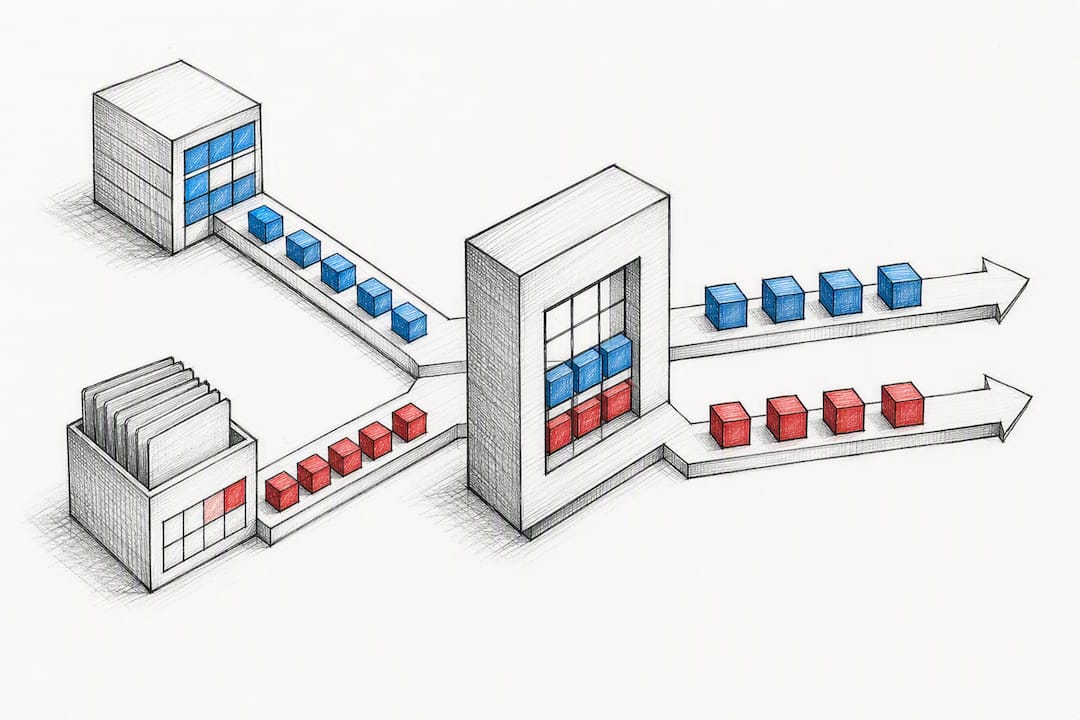
Server rendering and feed parity workflow

04

Which Product Schema Types Actually Matter?

Which Product Schema Types Actually Matter?

Schema markup is the highest-leverage fix on this entire list, because AI engines pull structured attributes directly from markup instead of parsing prose to guess at them. Fokal’s ecommerce SEO research identifies five schema types as critical for reliable extraction of price, availability, and return terms: Product, Offer, aggregateRating, Review, and MerchantReturnPolicy.

Add ShippingDetails to that list. An AI shopping agent comparing two near-identical products will often surface the one with a clearly stated shipping cost and timeline over the one that makes the shopper click through to find out.

Schema type What it tells the AI Common mistake
Product Name, brand, SKU, GTIN, category Missing GTIN, generic titles
Offer Price, currency, availability, seller Stale price after a sale ends
AggregateRating Average rating, review count No rating markup at all
Review Individual review text and rating Reviews exist on-page but aren’t marked up
MerchantReturnPolicy Return window, cost, method Policy stated in prose only, never in schema
ShippingDetails Cost, delivery time, handling time Omitted entirely on product pages

For stores with size, color, or bundle variants, implement ProductGroup schema so an AI system understands it’s looking at one product with options, not five unrelated listings competing against each other.

Feed and site parity matters just as much as the markup itself. If your Merchant Center feed says a product is in stock but your schema markup on the live page still shows the old inventory state, you’ve handed the AI system two contradictory facts, and it has no reliable way to know which one to trust. Prioritize these feed attributes above everything else: title, price, availability, GTIN or SKU, return policy, shipping cost, and image URLs. Run every updated product page through Google’s Rich Results Test before you consider the schema work done, and rerun it after any theme or platform update, since those updates are the single most common cause of schema silently breaking.

05

Writing Product and Category Content AI Will Cite

Writing Product and Category Content AI Will Cite

An AI system citing your product page is functionally doing what a knowledgeable friend does when a shopper asks for a recommendation: it repeats back a specific fact it trusts. Vague marketing copy gives it nothing to repeat. Specific, honest copy gives it a quote.

Rewrite product descriptions using this structure, in this order:

  1. Lead with the spec that differentiates it. Weight, material, battery life, whatever number a comparison shopper actually cares about, stated as a number, not an adjective.
  2. Add a one-line “best for” statement. “Best for wide feet and long trail days” tells an AI system exactly which query to match this product against.
  3. State an honest limitation. “Not ideal for narrow feet” reads as more trustworthy to both shoppers and AI systems than copy that claims universal perfection, and it reduces return rates by setting accurate expectations upfront.
  4. Close with a comparison anchor. A short line noting how it stacks up against a common alternative gives comparative queries something concrete to extract.

Category pages need a different treatment entirely. A descriptive introduction at the top of a category page, typically a few hundred words, answering the two or three questions every buyer in that category asks, along with the typical price range, gives AI Overviews and Perplexity an extraction target that a bare product grid never provides. This single change consistently punches above its weight because most stores never write one at all.

Add an HTML spec table and a short FAQ block to your highest-traffic category pages. Buying guides and well-structured category pages frequently outrank individual product pages for comparative queries in AI answer engines, because they answer the comparison question directly instead of forcing the AI to infer it from ten separate single-product pages.

When you use AI writing tools to draft this copy, use them for structure and first drafts, not final specs. Content optimization tools handle long-form buying guides well but struggle with the precision short product descriptions demand, so keep a human checking every number before it publishes.

06

Do Reviews and Editorial Mentions Influence AI Recommendations?

Do Reviews and Editorial Mentions Influence AI Recommendations?

Yes, and they carry more weight than most ecommerce teams assume. An AI system weighing two similar products treats independent confirmation of your own claims as a trust signal, the same way a shopper trusts a friend’s recommendation over an ad.

Three moves build that off-site authority layer efficiently:

  • Collect reviews systematically and mark them up with Review schema, not just star widgets that display visually but carry no structured data.
  • Pursue placement in comparison guides and roundup articles within your category. A mention in a widely cited buying guide gets absorbed into the same corpora AI systems draw from.
  • Monitor forums and Q&A sites like Reddit threads and category-specific communities where AI training data is known to be sourced, and respond accurately when your product comes up.

The aggregateRating count matters almost as much as the average score. A product with a 4.6 rating from 400 reviews reads as more reliable to an AI system than one with a 5.0 from six reviews, and that pattern holds across most comparative shopping queries.

07

Your 60 to 90 Day Ecommerce AI SEO Rollout

Your 60 to 90 Day Ecommerce AI SEO Rollout

Split the work into triage you can finish this week and engineering projects that need a sprint or two.

Days 1 to 7, triage:

  1. Audit robots.txt and CDN rules; unblock GPTBot, ClaudeBot, PerplexityBot, Google-Extended.
  2. Pull access logs and confirm those bots are actually hitting your product pages.
  3. Run your top 20 product pages through Rich Results Test and log every schema error.

Days 8 to 30, foundational fixes: 4. Implement or repair Product, Offer, AggregateRating, Review, and MerchantReturnPolicy schema across the catalog. 5. Fix feed and site parity issues in Merchant Center for price, availability, and stock. 6. Write descriptive introductions with FAQs for your top category pages by traffic.

Days 31 to 90, scale and measure: 7. Roll schema and content fixes out across the remaining catalog, prioritized by revenue. 8. Rewrite top 50 product descriptions using the four-part structure: spec, best for, limitation, comparison. 9. Set up monthly AI visibility checks: simulate common shopper queries in ChatGPT, Gemini, and Perplexity and log whether your product appears.

Priority Task type Owner
Immediate Crawler access, robots.txt, CDN rules Engineering
Immediate Rich Results Test audit SEO/marketing
Short-term Schema implementation across catalog Engineering + SEO
Short-term Feed and site parity fixes Ecommerce ops
Ongoing Category intros and FAQs Content team
Ongoing AI visibility query testing Marketing

Set a recurring maintenance trigger: any theme update, platform migration, or feed change gets an automatic schema and crawlability recheck before it ships, not after a customer notices your products vanished from AI answers.

08

Why Ecentic Helps Diagnose What AI Agents Actually See

Why Ecentic Helps Diagnose What AI Agents Actually See

Running every check in this guide by hand across a catalog of a few thousand SKUs is realistic for exactly nobody. That’s the gap Ecentic is built to close.

Ecentic connects directly to Shopify or WooCommerce and simulates how ChatGPT, Gemini, Claude, and Perplexity evaluate your product pages, then reports back in plain language rather than a raw crawl log.

The scans typically surface:

  • Missing or incomplete Product, Offer, and MerchantReturnPolicy schema, page by page
  • Crawler access blocks in robots.txt or CDN rules that a manual audit would take hours to find
  • Product copy that’s too vague for an AI system to cite with confidence
  • Where a competitor’s listing is winning the recommendation and why

Once a scan flags a fix, one-click publishing can push the correction straight to Shopify or WooCommerce without a developer ticket. Users have reported meaningful gains in both AI-driven visits and sales after implementing the flagged fixes, directional evidence that closing these specific gaps moves the needle rather than being a nice-to-have.

09

The Mistake Nearly Every Store Makes First

The Mistake Nearly Every Store Makes First

Most teams hear “AI SEO” and reach for more content. More blog posts, more product descriptions, more words on the page. That instinct is backwards, and it’s the single most expensive mistake I see stores make when they start this work.

AI systems don’t reward volume. They reward extractable, verifiable facts. A page with three sentences of vague marketing language and zero schema markup loses to a page with tight, factual copy and complete structured data every time, regardless of which page is longer.

The mindset shift that actually works is treating your product catalog like a database first and a marketing surface second. Ask of every page: could an AI system pull a correct price, an accurate return window, and an honest spec from this in under a second, without inferring anything? If the answer is no, that’s the fix that matters, not another paragraph of copy. Feed parity and schema completeness will outperform a content calendar every time you have to choose between the two.

— Xhurian

10

See What AI Shopping Agents See on Your Product Pages

See What AI Shopping Agents See on Your Product Pages

Ecentic gives you the one advantage a manual audit can’t: a direct simulation of how ChatGPT, Gemini, Claude, and Perplexity actually read your listings, side by side with the competitors they’re currently choosing instead of you.

Ecentic

Run a free scan of your product listings and you’ll get a plain-English breakdown of the exact schema gaps, crawler blocks, and copy weaknesses covered in this guide, mapped to your actual catalog instead of a generic checklist. Connect your Shopify or WooCommerce store, review the diagnostic, and use one-click publishing to push the fixes live without waiting on a developer sprint. From there, explore Ecentic’s full feature set or start with the platform page for Shopify stores if that’s where your catalog lives. The scan is free. The gap between your listings and the ones AI agents are currently recommending isn’t going to close itself.

11

Tools to Validate Your Fixes

Tools to Validate Your Fixes

Run Google’s Rich Results Test against any updated product page to confirm schema parses correctly. Check Fokal’s ecommerce SEO guide for schema type definitions, and review Semrush’s ecommerce AI SEO breakdown for feed and agentic protocol details. For a third-party playbook on the full workflow, BabyLoveGrowth’s ecommerce AI SEO guide covers additional technical checks worth running alongside your own audit.

12

Sources

Sources

  • Ecommerce AI SEO: How to optimize online stores for LLMs | Semrush Blog
  • The Complete Guide to Ecommerce AI SEO: How to Optimize for AI-Driven Search | Triple Whale
  • AI tools for ecommerce — WisePops
  • Share of generative AI use cases in search engines | Statista
13

FAQ

FAQ

Which AI Is Best for SEO Optimization?

No single AI model handles SEO end to end; the practical approach pairs a content optimizer for long-form writing with a specialized diagnostic tool, like Ecentic, for schema and crawlability checks that generic AI writing tools don’t cover.

What Is the Best AI for Ecommerce?

The best AI tool depends on the job: personalization, support, content, and SEO each favor different tools, and stores focused on AI shopping agent visibility specifically need a platform built to simulate and diagnose how those agents evaluate product pages.

Which Ecommerce Platform Is Best for SEO?

Shopify and WooCommerce both support the schema markup, feed integrations, and server-side rendering AI SEO requires, so platform choice matters less than how completely you implement product schema and merchant feed parity on whichever platform you use.

What Is AI SEO Called Now?

The term “AI SEO” is standard, though you’ll also see it called generative engine optimization or AI visibility optimization, and for online stores specifically, “ecommerce AI SEO” has become the common shorthand for the schema, feed, and content work this guide covers.

ecommerce SEO automationhow to optimize ecommerce with AIAI SEO strategies for ecommerceAI-driven SEO techniques for salesbest ecommerce ai seobest AI for online store SEOtop ecommerce AI tools
Back to blogGet started

Guides and research on winning AI shopping agents.

Get picked by AI

Ready to be the product agents recommend?

Install free on Shopify or WooCommerce and see your AI score in minutes.

Install on ShopifyInstall on WooCommerce
ecentic

Win every AI shopping agent's cart.

Built for the agent economy
Product
  • Features
  • How it works
  • Pricing
  • Product Listings
Platforms
  • Shopify
  • WooCommerce
  • Enterprise
Resources
  • Developer docs
  • API reference
  • Resources
  • Blog
  • Compare
  • UCP Validator
  • UCP Playground
  • Book a demo
Company
  • Support
  • Privacy policy
  • Terms of service

© 2026 ecentic. All rights reserved.

Made for merchants who refuse to be invisible to AI.