Optimizing for shopping bots means making your product pages machine readable enough that ChatGPT, Gemini, Claude, and Perplexity choose to recommend them. Three levers control that outcome: clean Product schema synced to your Merchant Center feed, server-rendered pages that AI crawlers can actually parse, and third-party trust signals like reviews and video. Fix those three, in that order, and you have a real shot at showing up in an AI Overview or a Perplexity shopping answer. A platform like Ecentic can run a free scan that tells you exactly which of the three is failing on your top SKUs right now.
TL;DR:
- Prioritize fixing schema markup, server-side rendering, and feed accuracy on your top 100 revenue SKUs to see measurable AI citation improvements within four to six weeks.
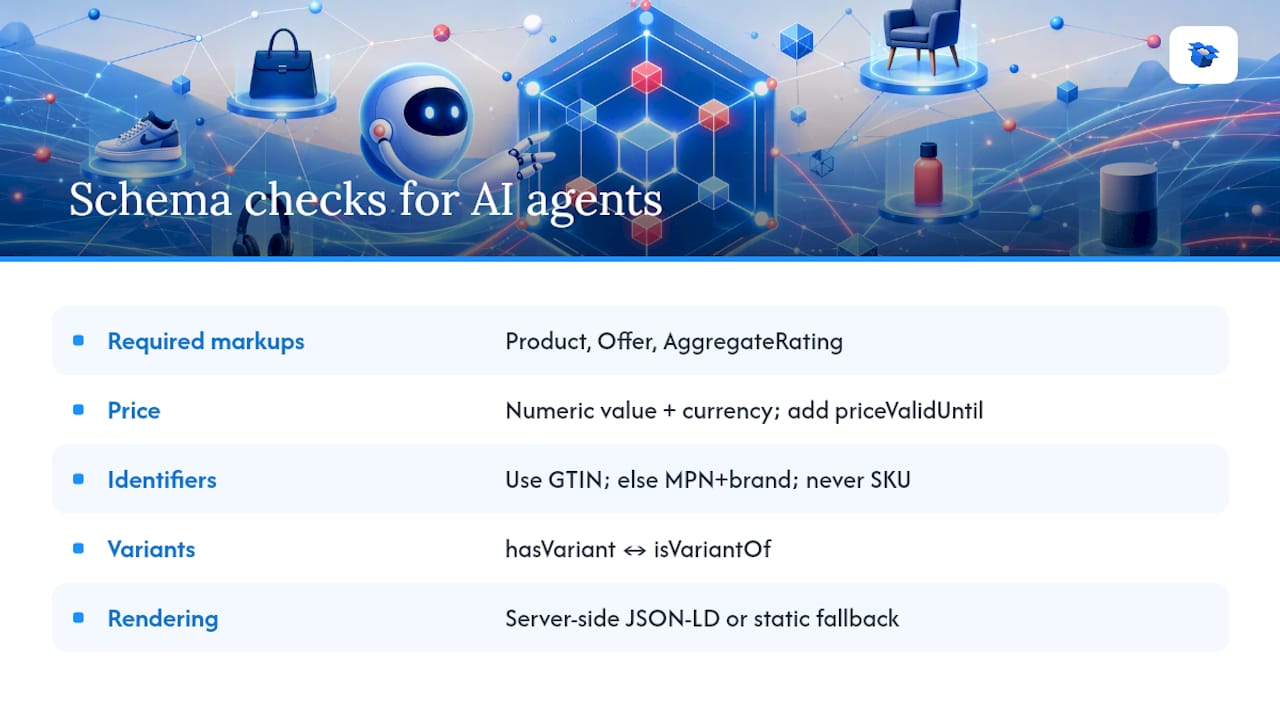
- Ensure your product schema includes GTINs or MPN and brand, with prices formatted as numeric values and
priceValidUntildates updated for promotions to pass validation.- Verify that your JSON-LD schema is embedded directly in the HTML and that there are no conflicting on-page schema and feed data about availability or pricing.
- Write detailed, use-case-focused product descriptions of at least 300 words, including explicit comparison and trade-off language to improve AI reasoning and cited recommendations.
- Use simulation tools that show how AI evaluates your product data before publishing, allowing targeted fixes that significantly boost AI-driven visits and sales.

 Install on Shopify
 Install on WooCommerce