ecenticecentic
How it worksResourcesPricingBlog
Install now
ASCII-art illustration of a stack of books

Best Shopify AI Apps for 2026, Shortlisted by Use Case

Published: August 15, 2026 · 24 min read

Discover the best Shopify AI apps of 2026 for boosting your store's performance, from product copy to customer support and more.

00

Key Takeaways

Decorative title card illustration in pencil and ink

If you only read one paragraph, read this one. Best for AI agent visibility: ecentic, because it simulates how ChatGPT and Gemini evaluate your product pages and tells you exactly what to fix. Best for store building: Shopify’s AI Store Builder or Shopify Sidekick, since both are native and free to start. Best for product copy: Jasper or Shopify Magic. Best for personalization: LimeSpot. Best for chatbots and support: Drift or Shopify Inbox, depending on budget. Best for image editing: Jolt. Most of these apps show measurable impact inside a week: connect your catalog, run a first scan, and you’ll usually see a draft output or diagnostic report within 24 to 48 hours.

The rest of this guide breaks down why each app earned its slot, what it costs, and which one fits a store like yours.

Key Takeaways

The best Shopify AI app depends entirely on your use case, but native tools win on speed and ecentic wins on AI agent visibility, a category most merchants haven’t optimized for yet.

Point Details
Match app to single use case Pick one primary goal (copy, personalization, support, visibility) before evaluating any app.
Native tools onboard fastest Shopify Sidekick and the AI Store Builder require no separate login or data exchange.
Test with a control group Hold out matched products during any 7-day trial to isolate the app’s real impact.
Check data access before authorizing Confirm exactly what catalog, order, or customer data an app reads or writes.
AI agents read listings differently Structured attributes, clear guarantees, and quality images matter more to agents than marketing copy.
ecentic targets a newer gap It simulates how AI shopping agents evaluate your Shopify listings and prioritizes fixes to improve recommendation rates.
01

What Are the Best Shopify AI Apps in 2026?

What Are the Best Shopify AI Apps in 2026?

The best Shopify AI apps in 2026 fall into six clear categories: store building, product copy, personalization, customer support, image editing, and now, a newer category that most guides miss entirely: AI shopping agent optimization. That last one matters because ChatGPT, Gemini, Claude, and Perplexity increasingly recommend products directly to shoppers, and a listing that reads fine to a human might get skipped by an AI agent scanning for structured attributes and clear guarantees.

  • ecentic — best for getting your products recommended by AI shopping agents, not just ranked in Google.
  • Jasper — best for high-volume product copy and marketing content across channels.
  • LimeSpot — best for personalized product recommendations that lift average order value.
  • Drift — best for conversational support tied directly to order actions.
  • Jolt — best for turning existing product photos into blog and social content fast.

Storebuild.ai and BuildYourStore.AI round out the store-building category for merchants who want a faster, more automated dropship setup than Shopify’s own builder offers. Each pick below gets its own detailed profile, including pricing, setup time, and who should skip it.

02

Compact Comparison: Top Shopify AI Apps at a Glance

Compact Comparison: Top Shopify AI Apps at a Glance

The table below compares the apps most Shopify merchants shortlist first. Pricing reflects publicly listed tiers where available; several apps publish custom or usage-based pricing instead of a flat rate.

Diagram comparing Shopify AI apps features and pricing

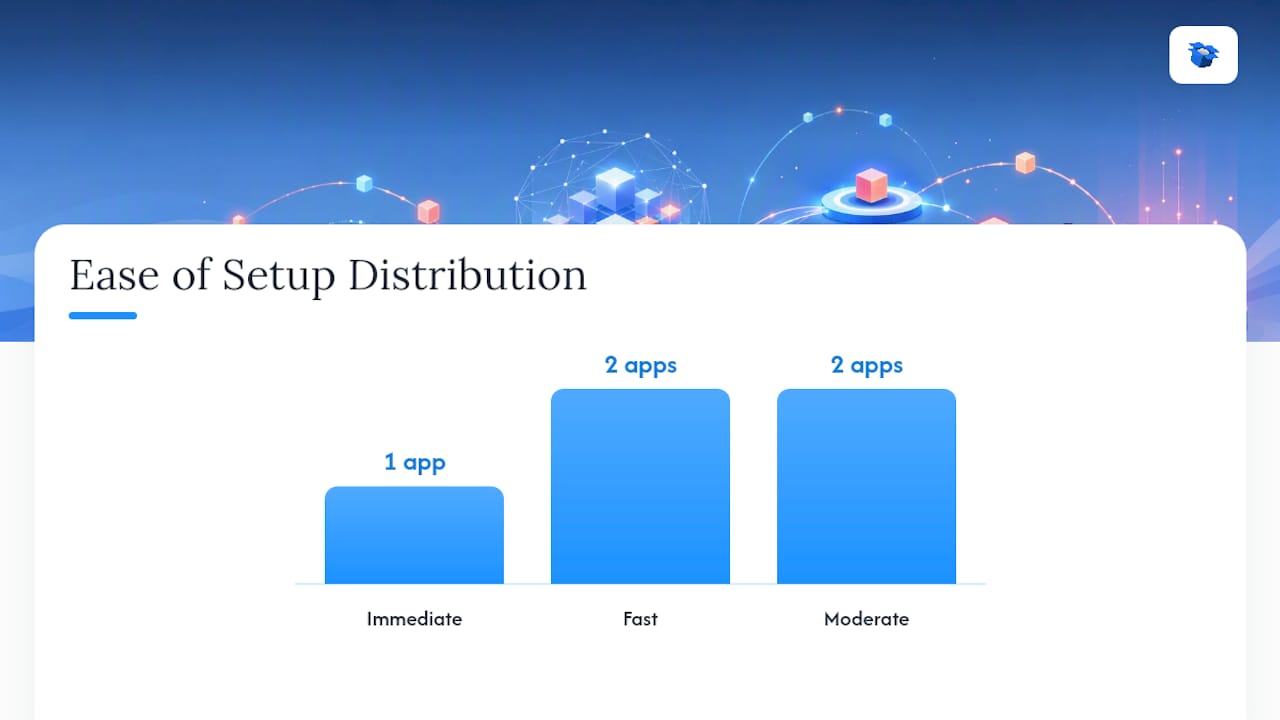
App Best For Pricing / Free Tier Shopify Integration Primary AI Capability Ease of Setup
ecentic AI shopping agent visibility for product listings Free scan, then subscription or usage-based Native Shopify + WooCommerce integration Simulation and diagnostics for AI agent recommendations Fast; connect catalog, get first diagnostic same day
Shopify Sidekick Native store management and quick tasks Included with Shopify plans Native Task generation, ShopifyQL queries, customer creation Immediate; built into admin
Shopify’s AI Store Builder Fast store launch from a text prompt Free to generate; standard Shopify plan needed to publish Native Store and page generation Fast; minutes to a draft store
Jasper Product descriptions, ad copy, blog content Paid plans, no permanent free tier External integration Copy generation Moderate; workflow setup takes some tuning
LimeSpot Personalized recommendations and upsells Free tier available, paid tiers scale with traffic Shopify app Personalization and recommendations Moderate; needs catalog and behavior data
Wiser AI Automated upsell and cross-sell placement Paid tiers based on store size Shopify app Upsell/cross-sell automation Moderate
Drift Conversational support with order actions Tiered pricing published on Drift’s pricing page External integration Chatbot with order-action integrations Moderate; more setup for advanced flows
Shopify Inbox Basic native live chat and automation Free Native Chatbot Immediate
Jolt Blog posts and images from product catalog Free tier plus paid plans Shopify app Content and image generation Fast

ecentic leads this list because it solves a problem none of the others touch directly: whether an AI shopping agent actually recommends your product when a shopper asks it for one. It reads your listings the way ChatGPT or Gemini would, then hands you a prioritized fix list instead of a vague score.

Before installing anything, gather your Shopify Admin API access, a rough sense of your catalog size, and admin rights to approve app permissions for Shopify SEO Automation. Apps that touch orders or customer data will ask for broader scopes than a pure copy-generation tool, so check what each one actually reads before you authorize it. The profiles below go deeper on pricing, setup friction, and who each app actually fits.

03

Detailed Profiles: What Each Top Shopify AI App Actually Does

Detailed Profiles: What Each Top Shopify AI App Actually Does

ecentic: best for AI shopping agent visibility

ecentic doesn’t try to be a store builder or a chatbot. It answers one question: will an AI agent recommend your product over a competitor’s?

  • Runs simulations of how ChatGPT, Gemini, Claude, and Perplexity evaluate product listings, then flags specific weaknesses (missing attributes, vague guarantees, thin descriptions).
  • Connects directly to Shopify and WooCommerce for one-click publishing of suggested fixes.
  • Includes competitive analysis so you can see why a rival’s listing gets picked over yours.
  • Tracks agent-driven traffic and attributes it to actual orders, not just page views.

Pricing: starts with a free introductory scan, then moves to monthly subscription tiers or a usage-based fee tied to agent-attributed orders. Setup: connect your store, and the first diagnostic report typically arrives the same day. Best fit: any Shopify merchant who has noticed AI answer engines sending traffic, or wants to before a competitor does.

Shopify Sidekick: best for native admin tasks

Sidekick is Shopify’s built-in AI assistant, and it’s genuinely useful for the boring parts of running a store. It can create customer records from a prompt, write ShopifyQL queries for sales and payments data, and suggest next actions based on your store’s activity.

  • Zero installation since it’s baked into Shopify admin.
  • Handles data queries that would otherwise require someone who knows ShopifyQL.
  • Free with your existing Shopify plan.

Pricing: included. Setup: instant. Best fit: solo store owners and lean teams who want a faster way to dig into their own data without hiring an analyst.

Shopify’s AI Store Builder: best for fast launches

Type a description of your business, and Shopify’s AI Store Builder generates a store complete with commerce-ready defaults like product recommendation blocks and review sections.

  • Generates a working draft store in minutes, not days.
  • Built-in commerce features arrive pre-configured, unlike a generic website builder.
  • Free to generate a store; you’ll need a paid Shopify plan to launch it publicly.

Pricing: free draft, standard Shopify plan required to go live. Best fit: first-time sellers who want to skip the blank-page problem entirely.

Storebuild.ai and BuildYourStore.AI: fast alternatives for dropship setups

Both tools focus on speed over customization. Storebuild.ai generates a full store and product pages from a handful of prompts, while BuildYourStore.AI leans specifically into dropship workflows with automated product import.

  • Pros: minimal manual setup, fast time to a live storefront.
  • Cons: less flexibility than building manually or through Shopify’s native builder; product quality depends heavily on your source catalog.

Best fit: merchants prioritizing speed to launch over a polished, differentiated brand.

Zeno Builder and Framer AI: design-first alternatives

Zeno Builder and Framer AI both lean toward visual, design-driven site generation rather than commerce-specific logic. They work better as page builders that happen to support ecommerce than as Shopify-native automation tools.

Pros: strong visual output, fast iteration on layout. Cons: less depth on Shopify-specific commerce features compared to native apps like GemPages or Shogun. Best fit: merchants who care most about visual design and are comfortable configuring commerce logic separately.

Landing page builders: Shogun, GemPages, PageFly, PagePilot, Atlas

This group solves a narrower problem: building high-converting landing and product pages without a developer.

  • Shogun offers deep customization and analytics, aimed at merchants running paid traffic campaigns.
  • GemPages balances ease of use with a large template library.
  • PageFly is a long-standing favorite for its drag-and-drop editor and Shopify App Store track record.
  • PagePilot and Atlas lean into AI-assisted layout suggestions, generating page structures automatically based on your product type.

Pricing: all publish tiered plans with free trials; exact costs depend on store traffic and page count. Best fit: merchants running paid ads who need pages that convert faster than Shopify’s default theme templates.

Copy and content: Jasper, DropMagic, Jolt, Wizzy AI

Jasper remains the heavyweight for marketing copy at volume: product descriptions, email campaigns, ad variations. It’s an external tool, not a Shopify app, so content gets copied over rather than synced automatically.

Hands typing product copy in ecommerce workspace

Jolt: AI Blog & Image Creation works directly inside Shopify, pulling from your product catalog to generate SEO-oriented blog posts and matching images without leaving the admin panel. DropMagic and Wizzy AI serve similar content-generation niches, with DropMagic leaning toward dropship-specific product descriptions and Wizzy AI focused on quick-turn copy for smaller catalogs.

Pro Tip: Never let an AI copy tool auto-publish without a review step. Set every content app to draft-only for the first two weeks, then measure whether the AI drafts need heavy editing before you trust them to publish unsupervised.

Personalization and upsells: LimeSpot, Wiser AI, Octane AI, TxtCart, Alia, Ringly.io

LimeSpot and Wiser AI both target the same goal, higher average order value, through different mechanics. LimeSpot leans on recommendation algorithms across product pages and email; Wiser AI focuses more narrowly on cart and checkout upsell timing.

Hands selecting products for AI personalization

Octane AI adds a layer most personalization tools skip: quiz-based funnels that segment shoppers before recommending anything. TxtCart, Alia, and Ringly.io push personalization into SMS and messaging channels, automating cart recovery and personalized outreach rather than on-site widgets.

Pricing: most offer a free tier capped by traffic or order volume, then scale with store size. Best fit: stores with enough traffic to generate meaningful behavioral data. Below a few hundred monthly orders, personalization engines often don’t have enough signal to outperform simple manual bundling.

Support and chat: Drift, Shopify Inbox, Freshdesk, LiveChat, Crisp, eesel AI, alby’s AI Shopping Assistant, tinyAlbert

Shopify Inbox is free and native, a reasonable starting point for stores that just need basic automated replies and order status lookups. Drift goes further, with order-action integrations and enterprise-grade conversational tooling that let a bot actually modify an order, not just chat about one.

Hands holding stylus over blank tablet for support

Freshdesk and LiveChat serve as general-purpose help desk platforms with ecommerce integrations bolted on, better suited to teams already using them for other support channels. Crisp splits the difference with a lighter, startup-friendly chat widget. eesel AI focuses on training a support bot directly on your existing help docs, which shortens setup for stores with an existing knowledge base. alby’s AI Shopping Assistant and tinyAlbert both position themselves as smaller, shopping-specific assistants aimed at guiding product discovery rather than resolving support tickets.

Pricing: Drift publishes tiered plans on its pricing page; Freshdesk and LiveChat follow similar per-agent pricing models. Best fit: Drift or Freshdesk for stores with real support volume and order complexity; Shopify Inbox or Crisp for smaller stores that just need coverage without a learning curve.

Search, SEO, and language: Boost AI Search & Filter, SEOAnt, LangShop AI Language Translate

Boost AI Search & Filter improves on-site search relevance, which matters more than most merchants assume: a shopper who can’t find a product through search often just leaves. SEOAnt handles more traditional SEO tasks like metadata generation and image alt text. LangShop AI Language Translate automates storefront translation for merchants expanding into new regions.

Best fit: larger catalogs (a few hundred SKUs or more) for Boost, any store wanting basic SEO hygiene without hiring a specialist for SEOAnt, and stores actively selling cross-border for LangShop.

04

How to Choose the Right AI App for Your Shopify Store

How to Choose the Right AI App for Your Shopify Store

Pick your primary use case before you look at a single app. A store struggling with product descriptions doesn’t need a personalization engine, and a store with a support backlog doesn’t need a page builder. Trying to solve three problems with one app usually means solving none of them well.

Run through this checklist before committing to a trial:

  1. Define the single outcome you’re optimizing for. More AI agent visibility, faster copy, higher AOV, or fewer support tickets, pick one.
  2. Check data access requirements. Some apps only need product catalog read access; others want order history, customer data, or checkout permissions. Wider access means more risk if something breaks.
  3. Confirm Shopify-native integration versus external embed. Native apps typically install faster and sync automatically; external tools often require manual copy-paste or a separate login.
  4. Ask about pricing structure. Flat monthly fee, usage-based, or percentage of attributed revenue, know which one you’re agreeing to before your store scales.
  5. Test whether actions are reversible. Can you preview AI-generated copy before it publishes? Can you roll back a change in one click?

Watch for these red flags during any trial:

  • No documented free tier or trial period, which usually signals the vendor wants to lock in pricing before you’ve validated value.
  • Vague answers about what customer or order data the app reads and stores.
  • No Shopify App Store listing at all for a tool claiming to be “Shopify-native.”
  • No clear way to measure the outcome you actually care about, whether that’s conversion rate, AI agent traffic, or ticket resolution time.

Ask every vendor directly: “Which store data will you read or write, and can I preview or undo any AI-generated changes before they go live?” A vendor that can’t answer that clearly in a sales call is not one you want handling your live catalog.

05

How We Tested and Picked These Apps

How We Tested and Picked These Apps

The shortlist here came from a mix of hands-on trial notes, published App Store signals, and vendor documentation, not a single benchmark test run once and generalized.

  1. Installed each app on a test store and completed the default onboarding flow, timing how long it took to reach a usable first output.
  2. Ran a 7-day quick-value check measuring time to first published change, whether AI suggestions matched the store’s actual catalog, and how many manual corrections were needed.
  3. Cross-referenced each app’s public trust signals, including App Store ratings and documented free-tier limits, against vendor claims.
  4. Reviewed vendor feature documentation directly rather than relying on marketing copy alone.

The gap between what a vendor’s landing page promises and what a fresh install actually does in the first hour is where most merchants get burned. Testing that gap directly, rather than trusting a feature list, is the only way to know if an app earns its place in a live store.

Ecentic is the publisher of this guide and one of the apps evaluated. That’s disclosed plainly here rather than buried: where ecentic appears in rankings, it’s judged against the same criteria as every other entrant, using its own documented feature set and public claims.

06

Why AI Shopping Agents Change What “Best” Means

Why AI Shopping Agents Change What “Best” Means

Search engines used to be the only gatekeeper between your product and a buyer. Now ChatGPT, Gemini, Claude, and Perplexity increasingly act as a second gatekeeper, one that reads your listing differently than a human scanning a page.

An AI agent parses structured attributes, not vibes. It looks for a clear title that matches the shopper’s actual query, specific product attributes (size, material, compatibility), a concise guarantee or return policy, and images with useful alt text. A listing stuffed with marketing language but thin on facts tends to get passed over in favor of a competitor’s plainer, more complete entry.

  • Title clarity matters more than keyword density. Agents match intent, not just strings.
  • Structured attributes (weight, dimensions, materials, compatibility) give an agent something concrete to compare against a shopper’s question.
  • Guarantees and return policies stated plainly reduce the “risk” signal an agent has to guess at.
  • Image quality and alt text feed directly into how confidently an agent can describe your product to a shopper who never sees the page.

This is the exact gap ecentic’s simulation-driven diagnostics are built to close: running your listing through the same evaluation logic an AI agent would use, then handing back a prioritized list of what to fix first, rather than a generic SEO score that ignores how agents actually read a page.

Pro Tip: Rewrite one flagship product listing manually using the structured-attribute approach above, then compare it against your current version in a simulation tool. The gap between the two versions usually reveals exactly what your whole catalog is missing.

07

Get Real Value in the First 7 Days

Get Real Value in the First 7 Days

Installing an AI app and walking away is how most merchants waste a trial period. A tight first week gets you an actual read on whether the app earns a permanent spot.

  1. Day 1: Connect your product catalog and authorize the specific data access the app needs, nothing broader.
  2. Day 2: Run the app’s initial scan or generate a first draft (a listing rewrite, a store page, a chatbot script).
  3. Day 3 to 4: Publish one test product or page with the AI-generated changes, keeping a matched control product unchanged.
  4. Day 5 to 6: Let both versions run and start tracking click-through rate, add-to-cart rate, and conversion rate side by side.
  5. Day 7: Compare results and decide whether to expand the rollout or roll back.

Hold out a small control group of products or pages during this test. Without one, you can’t tell whether a lift came from the AI app or from normal traffic fluctuation that week.

Pro Tip: Set a publish-approval gate on any AI-generated edit for at least the first two weeks, and keep a simple changelog. If a suggested change underperforms, you want a one-click way to know exactly what changed and revert it.

08

Onboarding and Support Quality Across These Apps

Onboarding and Support Quality Across These Apps

Native Shopify tools like Sidekick and Shopify Inbox win on onboarding simply because there’s nothing to onboard. They’re already in your admin panel, no separate login, no API key exchange.

Third-party apps vary widely. LimeSpot and Wiser AI both require enough historical order and browsing data to generate useful recommendations, so onboarding often includes a short data-collection window before results stabilize. ecentic’s onboarding centers on connecting your Shopify or WooCommerce catalog, after which the first diagnostic report typically arrives without a lengthy configuration phase.

Support quality tends to track company size and maturity. Established players like Jasper, Drift, and Shopify’s own tools maintain documentation libraries and responsive support channels. Newer or narrower tools, particularly some of the smaller personalization and content apps, often rely more heavily on self-serve help centers and slower email support. Before committing budget to any app, ask what response time to expect on a support ticket during a live issue, not just during a sales call. A chatbot vendor with a two-day support response time is a liability if your own customer chat breaks at 9 p.m. on a Friday.

09

Which Business Types Benefit Most From Each App

Which Business Types Benefit Most From Each App

A single-product dropship store and a 5,000-SKU multi-category retailer have almost nothing in common when it comes to AI app selection, even if both are technically “Shopify stores.”

Small stores just launching benefit most from Shopify’s native tools, Sidekick and the AI Store Builder, since they’re free and require no data history to be useful. A solo founder testing a product idea doesn’t need a personalization engine with no traffic to learn from.

Growing stores with a few hundred to a few thousand monthly orders are where personalization tools like LimeSpot and upsell automation like Wiser AI start paying off, since there’s enough behavioral data for the algorithms to work with. This is also the stage where ecentic’s AI agent visibility work starts mattering more, since a store with real order volume has real revenue at stake if AI shopping agents are skipping its listings for a competitor’s.

Larger catalogs and multi-brand operations tend toward heavier tools: Shogun or GemPages for landing pages at scale, Boost AI Search & Filter for navigation across thousands of SKUs, and Drift or Freshdesk for support teams handling meaningful ticket volume. Content-heavy brands running frequent promotions lean on Jolt or Jasper to keep output pace with a busy publishing calendar.

How we approach choosing AI apps now

What matters in a live store isn’t how impressive a demo looks. It’s whether the app tells you plainly what data it touches, whether you can measure a real lift afterward, and whether you can undo a bad suggestion in one click. Automation earns trust slowly, one reversible, measurable change at a time. We’d rather run a smaller AI rollout with a clean rollback path than a sweeping one nobody can audit, and that bias shapes most of what we recommend above.

10

Get Your Products Recommended by AI Shopping Agents

Get Your Products Recommended by AI Shopping Agents

Most of the apps above solve store building, copy, personalization, or support. None of them answer the question that’s starting to decide who wins the next sale: will ChatGPT or Gemini actually recommend your product when a shopper asks for one?

Ecentic

That’s the specific gap ecentic closes. It connects to your Shopify store, simulates how AI shopping agents read your listings, and returns a plain-English diagnosis of what’s holding a product back, whether that’s a missing attribute, a vague guarantee, or a description too thin for an agent to confidently recommend. From there, it pushes prioritized fixes straight back to your store rather than leaving you with a report and no next step.

Every merchant starts with a free scan of their current listings, no commitment required before you see what an AI agent actually sees. If the diagnostics show a real gap between your listings and a competitor’s, that’s the signal to move forward with a full trial on your Shopify integration. Run the free scan on your top five products this week and see what comes back.

11

Sources

Sources

  • AI-enabled commerce assistant, Sidekick, designed to make it easier for you to start, run, and grow your business on Shopify. - Shopify
  • Drift features
12

FAQ

FAQ

Which AI works best with Shopify?

It depends on the job. Shopify Sidekick and the AI Store Builder are the deepest native integrations, while ecentic is the strongest option specifically for making your listings visible to AI shopping agents like ChatGPT and Gemini.

What are the best AI tools for Shopify stores in 2026?

The strongest picks span categories: ecentic for AI agent visibility, Shopify Sidekick for native admin tasks, LimeSpot for personalization, Drift for order-integrated support, and Jolt for content generation from your product catalog.

How do I measure whether an AI app is actually working?

Track click-through rate, add-to-cart rate, and conversion rate against a held-out control group of unchanged products during a 7-day test window, rather than judging the app on its dashboard metrics alone.

Which AI store builder is best for Shopify?

Shopify’s own AI Store Builder is the fastest native option, generating a draft store from a short description in minutes. Storebuild.ai and BuildYourStore.AI offer similar speed for merchants who want a more automated dropship-specific setup.

How long does it take to see results from a Shopify AI app?

Most apps in this guide produce a first tangible output, a diagnostic report, a draft listing, or a generated page, within 24 to 48 hours of connecting your store, though personalization tools may need a week or two of order data before recommendations stabilize.

best shopify content appsbest artificial intelligence apps ShopifyShopify AI solutionsAI-driven Shopify featuresShopify AI app reviewstop AI tools for Shopifymust-have AI apps for ShopifyShopify apps to increase salesShopify apps for automationbest AI plugins for eCommerceai tools for shopifybest shopify ai apps
Back to blogGet started

Guides and research on winning AI shopping agents.

Get picked by AI

Ready to be the product agents recommend?

Install free on Shopify or WooCommerce and see your AI score in minutes.

Install on ShopifyInstall on WooCommerce
ecentic

Win every AI shopping agent's cart.

Built for the agent economy
Product
  • Features
  • How it works
  • Pricing
  • Product Listings
Platforms
  • Shopify
  • WooCommerce
  • Enterprise
Resources
  • Resources
  • Blog
  • Compare
  • UCP Validator
  • UCP Playground
  • Book a demo
Company
  • Support
  • Privacy policy
  • Terms of service

© 2026 ecentic. All rights reserved.

Made for merchants who refuse to be invisible to AI.