
AI competitor analysis uses large language models, embeddings, and automated data pipelines to pull competitor signals from dozens of sources, synthesize them into plain-language insights, and route those insights directly into Slack channels, dashboards, and battle cards your team actually opens. It replaces the quarterly PDF nobody reads with something closer to a live feed. If you’re starting today, do three things in the next hour:
- Pick five data sources you can legally access right now (competitor site, pricing page, App Store reviews, one job board, one ad library).
- Run a single crawl or manual pull on one competitor and paste the raw text into ChatGPT or Claude with a summary prompt.
- Turn that summary into a one-page brief and send it to whoever owns positioning on your team.
That last step is the quick win worth testing this week: take one competitor, one hour, and one AI summary, then judge whether the output actually changes a decision. If it does, you’ve validated the approach before spending a dollar on tooling.
Key Takeaways
AI competitor analysis works when structured data collection feeds a scoring system that routes only high-priority signals into the formats teams already use, like battle cards and Slack alerts.
| Point | Details |
|---|---|
| Start with five sources | Pick pricing, reviews, ads, product pages, and job listings before adding more. |
| Normalize before you automate | Structure scraped text into consistent fields so your LLM summaries stay accurate. |
| Score signals, don’t react to all of them | Use a weighted formula so only high-impact moves trigger a cross-functional review. |
| Push insights into existing workflows | Battle cards and Slack alerts get used; static reports usually don’t. |
| Diagnose AI agent visibility separately | Ecentic simulates how ChatGPT, Gemini, Claude, and Perplexity evaluate your product listings against competitors, a signal general CI tools don’t cover. |

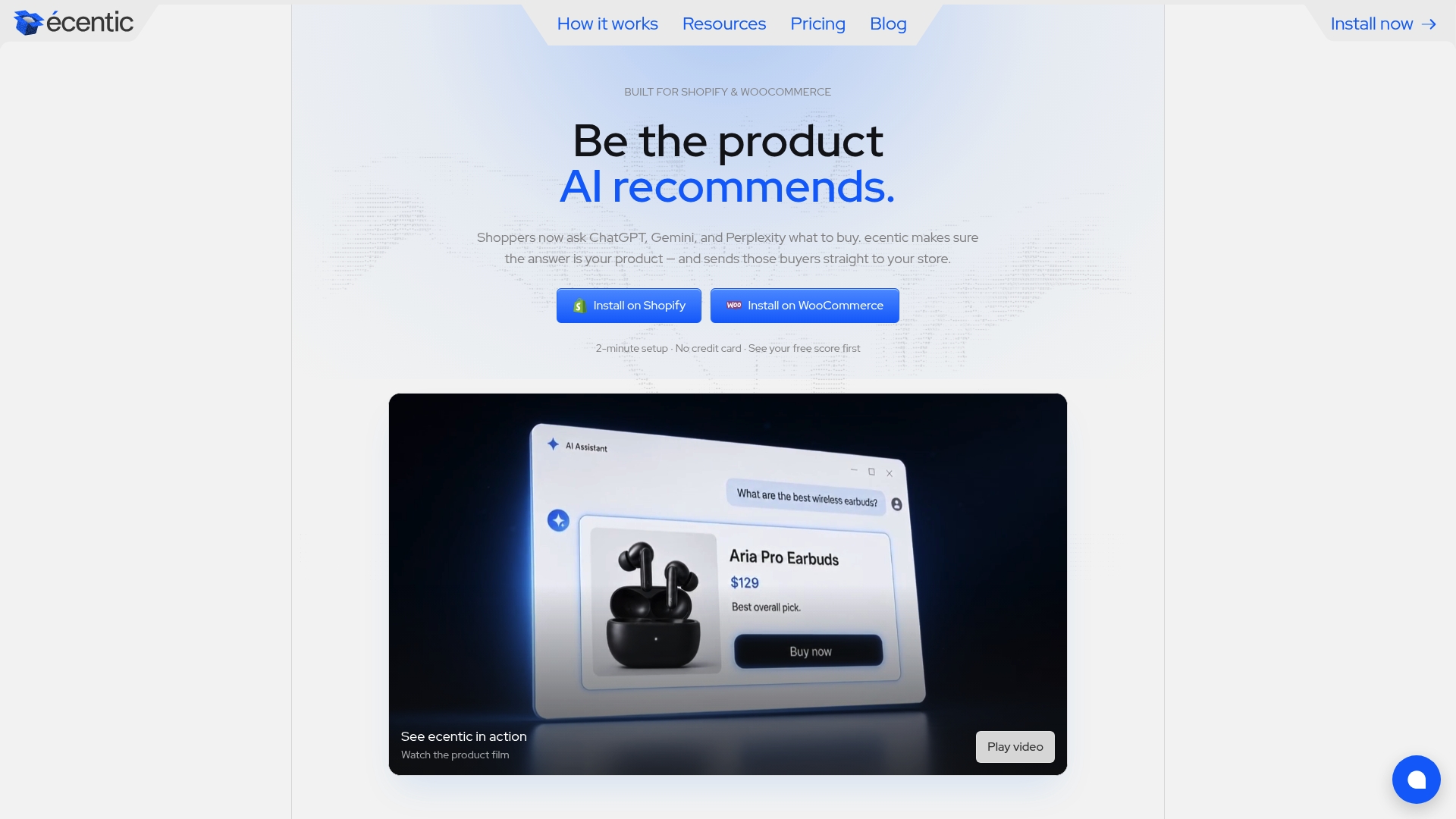
 Install on Shopify
 Install on WooCommerce